
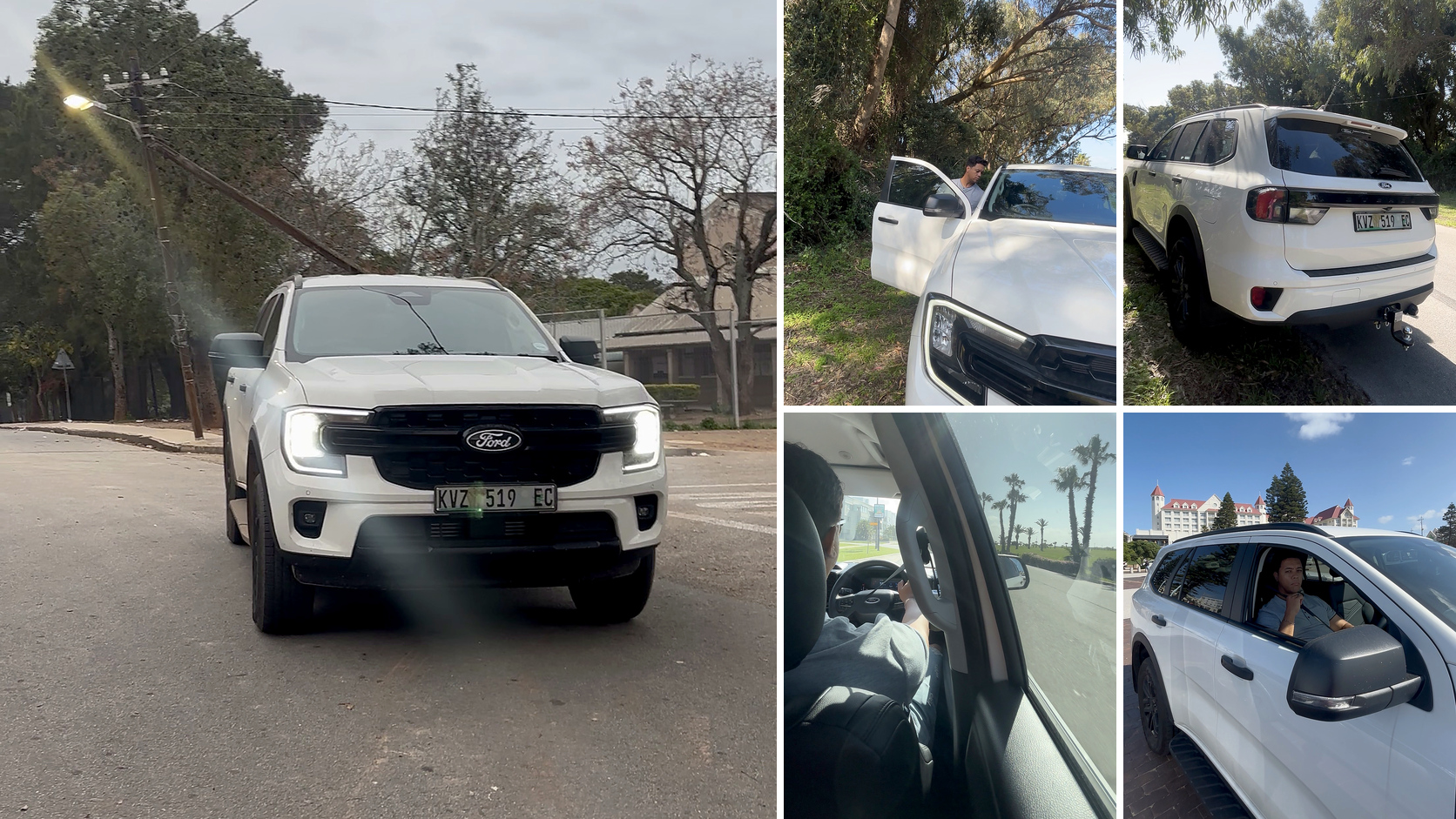
A seven-seater may promise space and practicality on paper, but how well does it handle everyday family life? Robin Meyers spent time behind the wheel of the 2026 Ford Everest Active to see whether this more accessible addition to the Everest range delivers where it matters.
The vehicle was supplied by Eastern Cape Motors for review purposes. All opinions and observations expressed in this article are those of the writer.
By Robin Meyers
Recently, I had the opportunity to spend some time behind the wheel of the 2026 Ford Everest Active.
The Everest is already a familiar name on South African roads, but the new Active enters the range with a particular purpose: offering the space, practicality and road presence associated with the Everest at a more accessible price point.
Specifications can tell you what a vehicle offers on paper. The real question is whether those features make sense in everyday life, particularly when you are dealing with a seven-seater of this size.
The Ford Everest in South Africa
The Ford Everest was launched in South Africa in 2009 as a large sports utility vehicle with ladder-frame construction. It has since been sold locally across three generations, developing a reputation as a family SUV with the toughness and capability associated with the Ford name.
The Active replaces the previous XLT as the entry point to the updated 2026 Everest range. Other derivatives in the line-up include the Sport, Wildtrak and range-topping Platinum.
Introducing the Everest Active
The model I drove was the Everest Active 4×2, powered by a 2.0-litre, four-cylinder turbo-diesel engine producing 125kW of power and 405Nm of torque. This is paired with a 10-speed automatic transmission.
Those numbers are useful, but they do not always tell you what a vehicle is like to live with. Despite its size, I found the Everest comfortable to drive and not unnecessarily difficult to manage from behind the wheel.
Its electric power-assisted steering helps when manoeuvring a vehicle of this size, while its elevated driving position provides a good view of the road. The Everest has an 11.8-metre turning circle and rides on 18-inch alloy wheels.
Inside the Everest
The Everest is a seven-seater, although that naturally depends on the size of the seven people.
To put its capacity into perspective, it can seat approximately four and a third of me comfortably. I attempted to test the third row personally, but at my height, getting into it became a review of my flexibility rather than the vehicle’s seating.
For children or smaller passengers, however, the additional seats make the Everest a practical option for larger families. There is sufficient space throughout the cabin for passengers to remain comfortable, particularly on longer journeys.
With all three rows in use, the Everest provides 259 litres of luggage space. Folding the third row creates considerably more room for luggage, groceries, sports equipment or the many other things a family manages to collect during a trip.
Climate control extends throughout the cabin, which is important in a seven-seater. There is little point in the driver being perfectly comfortable while the passengers in the back are experiencing a completely different season.
Technology and convenience
The centre of the dashboard is dominated by a 12-inch vertical colour touchscreen.
The infotainment system supports Apple CarPlay and Android Auto, allowing drivers to connect their phones for navigation, music and calls. It is connected to eight speakers, while five USB ports, in a combination of USB-A and USB-C connections, are available inside the vehicle.
These are the kinds of features that become particularly useful when travelling with several passengers, each carrying a device that is somehow already on five per cent.
The Everest Active also comes standard with a reversing camera and trailer monitoring technology. The reversing camera is a welcome feature in a vehicle of this size, particularly in shopping-centre parking areas where the spaces do not always seem to have been designed with large SUVs in mind.
Another useful addition is the Ford app. Depending on connectivity and the available vehicle functions, the app allows owners to monitor aspects of the vehicle remotely and access features such as remote starting.
What is the Everest Active like to drive?
I found the Everest generally comfortable and easy to drive.
The cabin provides plenty of room, and the high seating position gives the driver a commanding view of the road. The power-assisted steering makes the vehicle feel more manageable than its size might initially suggest, particularly at lower speeds.
The 10-speed automatic transmission takes care of gear changes without requiring much input from the driver. This contributes to the relaxed driving experience and suits the Everest’s role as a vehicle intended for family journeys as much as everyday driving.
It is worth remembering that the Active is the entry-level model in the Everest range. It is aimed at drivers who want the space, practicality and presence of an Everest without necessarily requiring all the luxury finishes or more powerful engines offered further up the range.
The verdict
The 2026 Ford Everest Active is a spacious and practical seven-seater with enough technology to meet the needs of a modern family.
Its greatest strengths are its comfortable cabin, flexible seating arrangement, elevated driving position and range of everyday convenience features. Despite being the most affordable derivative in the range, it still feels substantial and unmistakably like an Everest.
For someone looking for a large family SUV with room for passengers, luggage and the demands of daily life, the Active provides a practical entry into the Everest line-up.
As for the third row, I can confirm that it exists. I can also confirm that it was not designed around me.






Leave a Reply