
Nelson Mandela Bay Municipality says it remains focused on addressing historical inequalities through its latest Adjustment Budget, with the majority of funds directed towards previously disadvantaged communities.
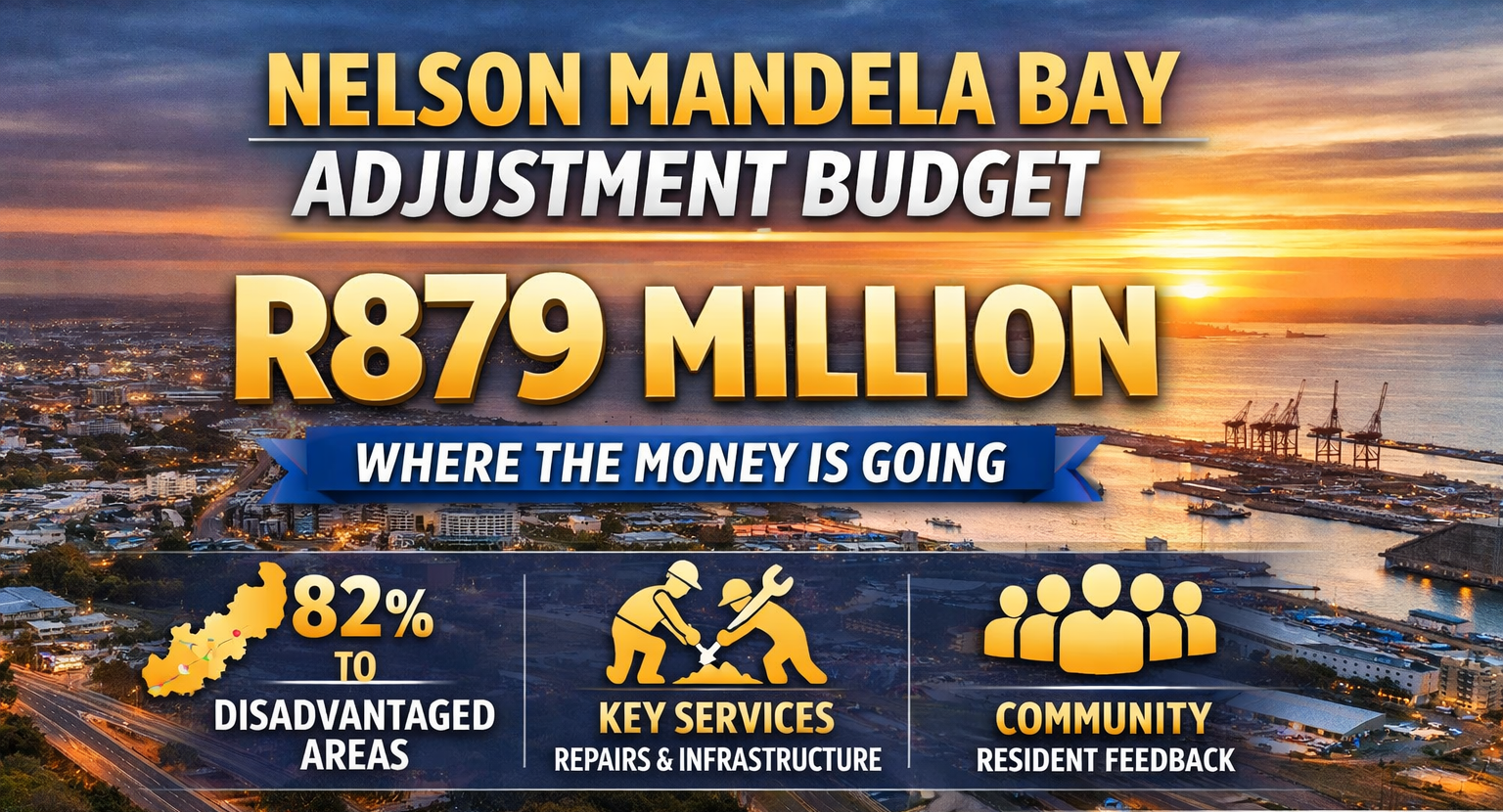
Of the R879,575,971 allocated across the Metro’s 60 wards, 82 percent of the funding has been directed to previously disadvantaged areas, in line with the municipality’s 80–20 budget framework.
The Adjustment Budget was approved in terms of Section 28 of the Municipal Finance Management Act (MFMA), which allows municipalities to revise budgets during the financial year to respond to changing circumstances and service delivery needs.
Where the Money Is Going
Nelson Mandela Bay’s 60 wards are grouped into six clusters. The latest allocations show how the municipality plans to distribute funding across the Metro.
The Champion Galela Cluster, which includes wards in Zwide and KwaDwesi, received the largest allocation at 30.8 percent.
The Zola Nqini Cluster, which includes wards in Kariega and Despatch, received 19.9 percent.
The Lilian Diedericks Cluster, covering the Northern Areas, received 18.4 percent.
The Alex Matikinca Cluster, which includes Motherwell and Wells Estate, received 13.4 percent.
The Govan Mbeki Cluster, covering New Brighton and KwaZakhele, received 8.2 percent.
The Molly Blackburn Cluster, which includes suburban areas, received the remaining 9.2 percent.
What the Budget Will Fund
According to the municipality, the budget allocation will support several key service delivery interventions across the Metro.
These include:
• Repair and maintenance of sanitation infrastructure
• Refuse collection services
• Maintenance of parks and cemeteries
• Repair of potholes and roads
• Road markings and walkways
• Maintenance and repair of streetlights
• Upgrades to water and electricity infrastructure, including pump stations and substations
Addressing the Imbalances of the Past
Nelson Mandela Bay Executive Mayor Babalwa Lobishe said the budget is aimed at addressing long-standing inequalities in infrastructure and service delivery.
“As a municipality, we have a huge task of correcting the imbalances of the past,” said Lobishe.
“Our people were subjected to sub-standard services and infrastructure that were close to non-existent. We therefore have to be bold enough to invest more in order to change this historic picture.”
She added that the budget allocations also reflect feedback received from residents during Integrated Development Plan (IDP) and Budget Public Participation meetings held across the Metro.
“In all our engagements across the Metro, it became clear that there is still a significant amount of work that needs to be done to improve the lives of our people. This is reflected in the ward-based budget allocations that the Council has approved,” she said.




Leave a Reply