
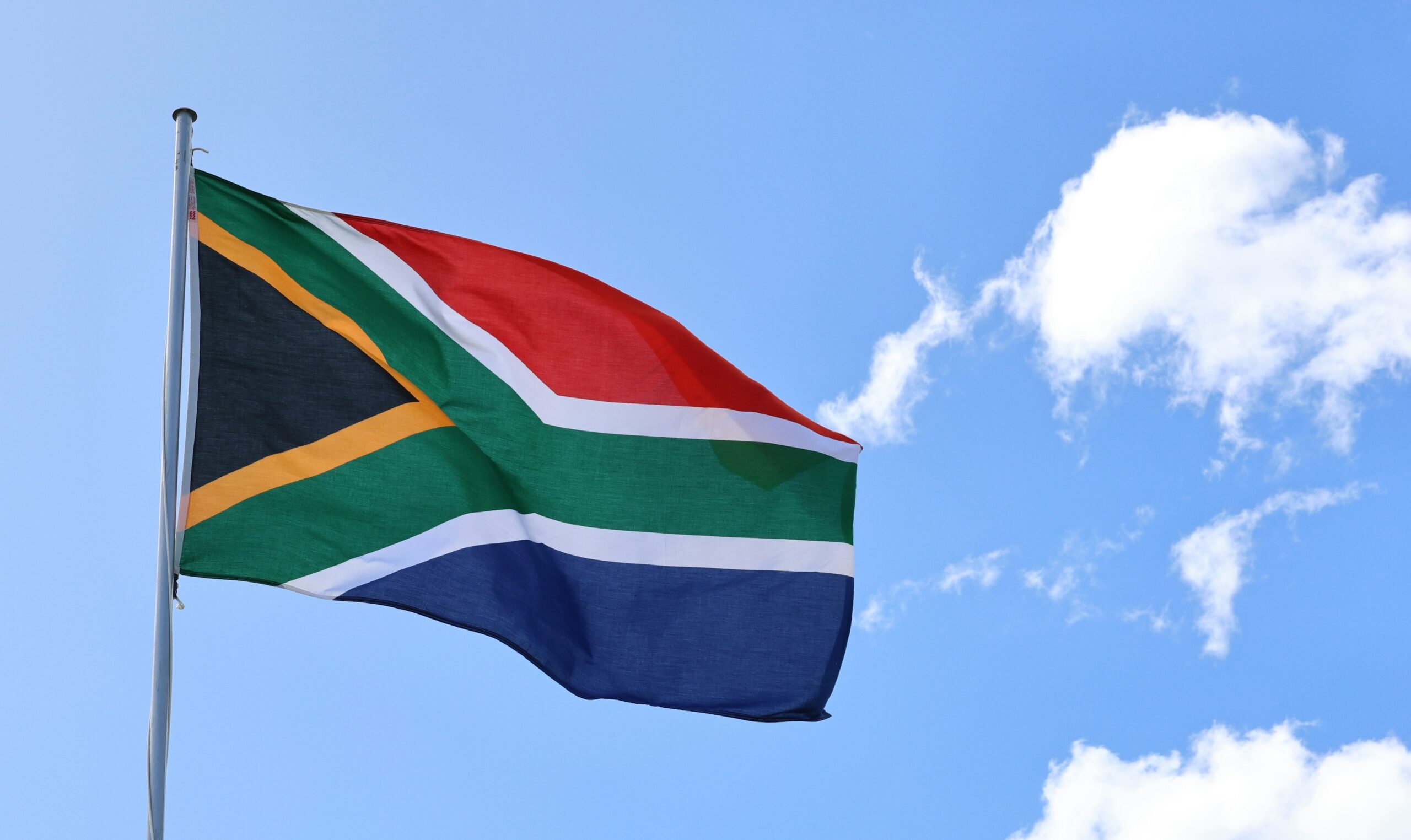
As South Africans prepare to celebrate Heritage Day, diversity and inclusion specialist Devan Moonsamy asks a difficult question: Which parts of our inheritance deserve to be preserved, and which should end with us?
By Devan Moonsamy
On 24 September, South Africa will do what it does best: gather. There will be flags and beadwork and doeks and boere-hoede in the same photograph. There will be smoke rising off braais in suburbs and townships and farms at the same time, which is still, more than three decades into our democracy, a small miracle.
Government has called this year’s theme “Celebrating Our Living Heritage: Strengthening the Ties That Bind Us,” and for one day, we will mostly agree to feel good about where we come from.
I want to ask a harder question. Not simply, “What is our heritage?” but “What is it costing us to keep it?”
I have spent years working with people and organisations around diversity, inclusion, human behaviour, leadership and workplace culture. My work in corporate mental health has shown me another side of that conversation: the psychological consequences that can arise when people feel they are not permitted to be different from the expectations they inherited.
What I have learned, over and over, is that almost nothing gets passed down because every generation carefully tested it and decided it was good. Much of what we inherit is passed down because that is simply how things have always been done.
Sometimes nobody in the chain felt safe enough, powerful enough, or perhaps even thought it possible, to be the person who said: This stops with me.
We are very comfortable calling all of this heritage. I think some of it is simply unexamined harm with better PR.
Not everything our ancestors handed us is an heirloom. Some of it is baggage.
We inherit more than culture
Every culture and every family gives its children an invisible rulebook.
Good daughters behave like this. Real men behave like that. People like us marry people like us. Respect your elders. Family comes first. Don’t embarrass the family. We don’t discuss what happens inside this house. Men don’t cry. Women must endure. Divorce is failure. Depression is weakness. Therapy is for people who cannot cope.
A successful child becomes a doctor, lawyer, accountant or engineer. A woman should eventually become a mother. A man must provide regardless of what it costs him psychologically.
And perhaps the most powerful rule of all: What will people say?
Not every South African family believes these things, of course. These ideas are certainly not unique to any one racial, religious or cultural community. But many South Africans will recognise at least some of them.
I think of these as inherited psychological rules. That is not a clinical diagnosis. It is simply a useful way of describing the unspoken instructions we inherit about who we are allowed to become.
Some of these rules are wonderful. They teach responsibility, community, respect, generosity, resilience, connection and belonging. Others can quietly become prisons.
In many South African households, across cultures and communities, there can be an unspoken rule that pain stays inside the house. Depression becomes “being lazy.” Trauma becomes “something we don’t discuss.” Someone who says “I’m not okay” may learn that the acceptable response is to become quieter, stronger, more grateful or more prayerful rather than to continue talking about what is hurting.
There is South African research that should make us think carefully about this. A 2024 qualitative study exploring understandings of depression among a small group of South African Indian men in Gauteng found that participants described depression as taboo in their communities.
Gender-role expectations, self-stigmatisation and fear of discrimination were also identified as barriers affecting help-seeking. The study was small and should not be generalised to all Indian men or South Africans, but its findings illuminate something many people working in mental health recognise: culture, gender expectations and stigma can influence whether people feel able to speak about psychological distress.
We can inherit silence almost as easily as we inherit a surname.
Sometimes we rename that silence strength, privacy, dignity or respect. But silence does not necessarily mean that everybody is well. Sometimes it simply means that nobody feels permitted to say that they aren’t.
Control is a heritage. So is the fear that enforces it
Ask a woman raised under the instruction that her worth is measured by obedience, modesty or her usefulness to a household how much of that expectation came from love and how much came from fear of what “the community would say.”
Ask the young person who is told who they are allowed to love. Ask the son who wants a career his parents don’t consider respectable. Ask the daughter who does not want the life that was planned for her. Ask the man who has been taught that providing for everyone else matters more than acknowledging that he is falling apart.
Ask the person who loves their family deeply but has discovered that belonging sometimes appears to come with conditions.
Some of what we protect as culture is, if we are honest with ourselves, simply control that has been in the family long enough to acquire a more dignified name.
That does not mean culture is bad. It means culture is powerful. And anything powerful deserves to be examined.
Many adults will remember physical punishment as a completely normal part of childhood. Some will say, “It happened to me and I turned out fine.”
But we now have a substantial evidence base on corporal punishment that previous generations simply did not have. The World Health Organization reports that corporal punishment is associated with harmful physical and mental-health outcomes, behavioural problems and impaired socio-emotional development, and that research has not established positive outcomes for children from its use.
That does not require us to condemn our parents or grandparents as monsters. Most parents raise children using the knowledge, norms and resources available to them at the time.
But once a generation knows more, surely it has permission to do differently.
Honouring the people who raised us does not require us to repeat everything they did. That principle applies far beyond discipline.
Culture deserves respect. People deserve protection
This is where conversations about diversity become difficult. We have become rightly cautious about judging cultures other than our own. South Africa’s history gives us very good reason to be.
For generations, supposedly superior groups decided that other people’s languages, customs, religions and ways of living were inferior. We must never return to that arrogance.
But there is an important difference between respecting culture and refusing to question anything done in its name.
Sometimes we have allowed the sentence “that’s our culture” to end conversations that it should actually begin.
What happens when preserving family honour means hiding abuse? What happens when “respect your elders” means a young adult believes they have no right to establish a boundary? What happens when masculinity teaches a depressed man that asking for help makes him weak? What happens when a woman is taught that enduring an unhappy or harmful situation makes her a good wife?
What happens when somebody is rejected because of who they love? When infertility becomes a source of shame? When psychological illness must remain secret because people are afraid of what the community will think?
At what point does cultural preservation become the preservation of harm?
That question does not disrespect heritage. It takes heritage seriously enough to examine it.
You can love your culture and still question it
This is particularly important for younger South Africans. Rejecting one expectation from your culture does not require you to reject your culture.
A woman can love her heritage and reject sexism. A man can honour his father and decide to parent differently. A person can deeply value their faith while questioning how people are sometimes treated in its name.
A young South African can respect their elders without surrendering every adult decision to them. Someone can love their family while establishing boundaries with them.
Identity is not all or nothing.
You do not have to burn down the house simply because you have decided to renovate one of its rooms.
This matters enormously in diversity and inclusion work. Sometimes we become so determined to respect people’s identities that we inadvertently put people back into boxes.
Race matters. Culture matters. Religion matters. Gender matters. Language matters. History matters. But none of these tells us everything about an individual human being.
The purpose of diversity should never be to tell people what they are supposed to believe because of the group into which they were born. It should help create a society in which people can belong to a group without surrendering their individuality to it.
That is a harder form of inclusion. It is also a more meaningful one.
“What will people say?”
Of all the psychological rules we inherit, our relationship with shame is particularly powerful.
Many of us were raised to consider not only whether something was right or wrong, but how it would appear to other people.
What will the family think? What will the community say? What will people at church think? At the mosque? At the temple? What will the neighbours say? What will the aunties say? What will people think of us?
Social accountability has value. Human beings need communities, and communities need standards. But there is a difference between conscience and shame.
Conscience asks: “Is what I am doing right?”
Shame asks: “What will they think of me if they find out?”
Those are very different psychological questions.
When appearances become more important than wellbeing, families can become extraordinarily good at looking healthy while people inside them are suffering.
The marriage must look successful. The children must look successful. Nobody must know about the addiction. Nobody must know about the depression. Nobody must know about the financial problems. Nobody must know about the abuse. Nobody must know about their sexuality. Nobody must know that somebody wants to leave.
Nobody must know.
Sometimes an enormous psychological burden is contained in those three words.
What do we actually keep?
We keep Ubuntu, properly practised, not merely recited at ceremonies but lived in how we treat the most vulnerable person in the room.
We keep the languages. We keep the music. We keep the storytelling. We keep the recipes that took a grandmother forty years to get right. We keep the rituals that connect us to people who died before we were born.
We keep community. We keep spirituality. We keep belonging. We keep the resilience narratives that carried entire families and communities through things that should have broken them.
We keep the parts of our heritage that were built to hold people up.
We should be brave enough to question the parts that exist mainly to hold people in place.
Culture is not a museum exhibit. It was never frozen in time. Our grandparents did not live exactly as their grandparents lived. Our parents changed things. We changed things. Our children will change things again.
Culture survives precisely because culture evolves.
The heritage we are creating right now
Perhaps Heritage Day should therefore be about two inheritances: the one we received and the one we are creating.
Those of us raising children now are already manufacturing somebody else’s heritage.
Our children are watching how we speak about people who are different from us. They are learning what we believe a man should be and what we believe a woman should be. They are watching how we deal with conflict.
They are learning whether emotions are discussed or suppressed. They are learning whether asking for psychological help is courageous or embarrassing.
They are listening to how we speak about race, class, religion, sexuality, culture and difference. They are discovering whether love in our families is unconditional or dependent upon conformity.
One day, the things we say casually around our dinner tables may become the voices inside our children’s heads.
That is an extraordinary responsibility.
Perhaps becoming an adult is partly about deciding which parts of our inheritance deserve to become our children’s inheritance.
So this Heritage Day, wear the clothes. Cook the food. Teach your children the language. Tell them where their grandparents came from. Play the music. Perform the rituals. Tell the stories. Honour the people whose sacrifices made your life possible.
Preserve everything beautiful that deserves to survive another generation.
But perhaps we should also have the courage to open that inherited suitcase and look honestly at everything inside it.
Keep the love. Keep the community. Keep the stories. Keep the wisdom. Keep the language. Keep the belonging.
But the prejudice? The shame? The silence? The misogyny? The racism? The homophobia? The belief that suffering must be hidden? The idea that men must never break? The idea that women must always endure? The belief that children owe us the lives we imagined for them?
We are allowed to put those things down.
This Heritage Day, I am not asking anyone to burn their family history. I am asking South Africans to do something harder than waving a flag: sit with the traditions and beliefs we inherited and ask honestly which ones we are keeping because they still serve the people in our lives, and which ones we are keeping simply because we are afraid of being the generation that finally puts them down.
Our ancestors lived in the world they inherited and made the choices they understood within it. We live in ours. Our children will live in another.
Honouring the people who came before us does not require us to repeat everything they believed. Sometimes the greatest respect we can show our heritage is to preserve what made us stronger, confront what caused harm, and have the courage to leave some things behind.
Not everything our ancestors handed us is an heirloom. Some of it is baggage.
So perhaps the most important question we can ask this Heritage Day isn’t simply:
“Where do I come from?”
It is:
“What ends with me?”





Leave a Reply