

In the small Eastern Cape town of Alicedale, a family-owned business is keeping generations of textile craftsmanship alive. As Barnard Mohair approaches its 60th year, its story is as much about the people behind the products as it is about the mohair itself.
There are some things that simply aren’t made the way they used to be. But in Alicedale, a small town in the Eastern Cape, a family business is making sure that traditional craftsmanship still has a place in the modern world.
At Barnard Mohair, specialist weaving machines, some of them used for generations, continue to turn locally sourced mohair into blankets, clothing and homeware.
And while the machinery has an interesting history of its own, the real story is about the family and community that have kept it running for almost six decades.
A family business built to last
Barnard Mohair’s story began when Louise Cameron’s father discovered mohair at the age of 23.
Fascinated by the natural fibre and its possibilities, he moved to Alicedale and established a hand-weaving business producing curtains, cushion covers and table runners.
His wife, a fashion designer from Munich, Germany, brought her own creative expertise to the business, introducing mohair jerseys and other garments.
Together, they built a company around the idea that beautiful products should also be made to last.
Today, Louise and her sister, Katrina Nel, are continuing that legacy.
Although the business has evolved and its products have changed over the years, its commitment to local production remains.
Keeping traditional skills alive
Inside the factory, German-engineered weaving machines remain an important part of production, while specially imported European brushing machines give mohair blankets their distinctive fluffy finish.
But these machines are only part of the process.
Much of the work still depends on skilled people, with knowledge of dyeing, weaving and finishing passed down through generations of workers.
For Louise, keeping that expertise in Alicedale is particularly important.
“Geography plays a great role in our production process,” she explains. “We are within a 200km radius of all our suppliers, and our mohair supplier is only about 100km away.”
The business also supports a wider network of local suppliers, technicians and craftspeople who contribute to the finished products.
“It really is a value chain,” says Louise. “Every person has a part to play.”
More than just a blanket
The Eastern Cape has a long history of Angora goat farming, with generations of farmers developing the knowledge needed to produce quality mohair.
That expertise extends beyond the farms to the people who transform the fibre into finished products.
For Barnard Mohair, maintaining that local network means supporting jobs and preserving skills that might otherwise disappear.
Louise says the company’s approach to responsible sourcing also forms part of that commitment. Farmers selling mohair through auctions under the Mohair Responsible Standard must meet prescribed requirements and undergo annual checks covering animal welfare, nutrition, living conditions, transport and employment practices.
The company has also adapted to changing markets. While international customers once accounted for much of its sales, the majority of Barnard Mohair’s products are now sold in South Africa.
Challenging what we think we know about mohair
If the word mohair immediately makes you think of a scratchy old jersey, Louise would like to change your mind.
“People think mohair is scratchy,” she says.
According to Louise, older mohair products from the 1970s and 1980s sometimes contained more kemp, a coarse fibre that could give them a rougher feel.
Changes in breeding and production have since made it possible to produce exceptionally soft mohair.
Today, the natural fibre is used in everything from clothing and shawls to blankets and home décor.
For Louise, however, the appeal goes beyond softness or appearance. It’s about choosing products that can remain part of a family’s life for years.
A legacy that supports a community
For a small rural town like Alicedale, the impact of a long-standing family business extends well beyond its factory walls.
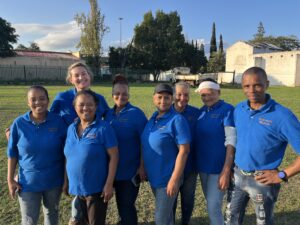
Generations of local families have worked at Barnard Mohair, with employees supporting their own households and contributing to the surrounding economy.
When Louise’s father died, more than 180 people attended his funeral, including many who had worked alongside him over the years.
“He really believed in people,” Louise recalls. “He had a real heart for job creation.”
It is a legacy she and Katrina are determined to carry forward.
For Louise, buying locally made products is one way consumers can help preserve businesses and the communities that depend on them.
“If it’s not supported, it can’t continue,” she says.
Why buying local matters
As Barnard Mohair approaches its 60th year, Louise hopes its products will continue to be passed from one generation to the next.
The travel-sized blankets that formed part of the company’s earliest collections are still being produced, with new patterns and designs keeping them relevant for today’s customers.
It’s a different approach to the fast-fashion culture of buying cheaply and replacing things frequently.
For Louise, the goal is to create something that people will still be using 20 years from now.
And perhaps that’s what makes this Eastern Cape story worth sharing. Behind every blanket or jersey is a network of farmers, makers and families whose skills have been developed over generations.
In Alicedale, preserving those skills is about more than keeping a family business going. It’s about making sure there is something meaningful to pass on.
For more information, visit Barnard Mohair.





Leave a Reply