

What started with just 30 learners in Gqeberha has grown into a continent-wide coding initiative, reaching more than 50,000 young people across 10 African countries.
Coding 4 Africa, an initiative developed through the Gqeberha-based Tangible programme of the LEVA Foundation, ran from 18 July to 18 August 2026 and reached 513 schools and organisations, generating more than 200,000 engagements.
The programme has particular relevance as South Africa begins the phased introduction of Coding and Robotics into primary schools in 2026.
While the Department of Basic Education has indicated that the costs associated with teacher training, equipment and IT infrastructure mean the subject cannot yet be made mandatory for every learner, Coding 4 Africa is taking a different approach.
Its activities are designed to introduce coding and computational thinking even in schools that do not have access to computer laboratories.
From 30 Gqeberha learners to more than 50,000
Coding 4 Africa has its roots right here in Nelson Mandela Bay.
The initiative grew out of Coding 4 Mandela, which began in Gqeberha in 2018 with just 30 learners. Eight years later, the programme expanded across the continent under the Coding 4 Africa banner.
Professor Jean Greyling, founder of Tangible, said the programme focuses on finding ways for schools to begin teaching computational thinking using the resources already available to them.
“We talk a lot about what schools don’t have. Coding 4 Africa starts with a different question: what can we do with what they already have?” Greyling said.
“This isn’t about saying schools don’t need computers. They do. But children shouldn’t have to wait until every school has a computer lab before they can start learning how to solve problems, build sequences and understand the thinking behind coding.”
Learning to code without a computer lab
Activities were adapted according to the ages of participating learners.
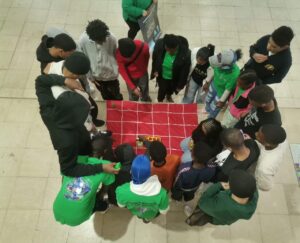
Younger children were introduced to concepts such as patterns and sequencing, while older learners used Tangible coding games to build, test and correct sequences of instructions.
The activities incorporate concepts included in South Africa’s Coding and Robotics curriculum for Grades R to 9, including sequencing, patterns and problem-solving.
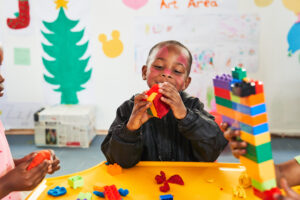
Rather than relying solely on technology, Tangible uses hands-on games to help teachers introduce learners to the thinking behind coding.
Teachers themselves have played a significant role in expanding the programme.
In KwaZulu-Natal, for example, a single training session involving more than 60 Foundation Phase teachers resulted in coding activities being taken back to Grade R to 3 learners at schools across the province.
Similar teacher-led participation took place at schools and through community programmes in South Africa and countries including Lesotho, Uganda and Zimbabwe.
Coding creating opportunities beyond the classroom
For some learners, the programme has also helped spark ambitions for their futures.
Dr Mogie Moonsamy, Tangible Regional Zone Coordinator for the iLembe District in KwaZulu-Natal, shared the story of Stanger Manor Secondary learner Uzziah Naidoo.
As a 12-year-old, Naidoo remembered carrying a floating trophy at the KwaZulu-Natal provincial coding championships and dreaming that he might one day win it himself.
After previous losses, his team continued competing and was this year named the Grade 10 provincial winner.
Reflecting on the role coding has played in his life, Naidoo said: “To a coder, victory is not by chance. It is built line by line, with patience, logic, and never giving up.”
He now hopes to become an aerodynamic Formula 1 race car engineer.
A Gqeberha idea with continental reach
For Nelson Mandela Bay, Coding 4 Africa’s growth represents another locally developed initiative finding an audience well beyond the city.
From a programme involving 30 learners in Gqeberha in 2018 to more than 50,000 learners across 10 African countries in 2026, its expansion also shows how teacher-led, low-resource approaches can help broaden access to digital skills while schools continue navigating infrastructure challenges.
Coding 4 Africa 2026 was sponsored by Amazon and Dutoit.
Tangible is a flagship programme of the LEVA Foundation and develops hands-on games and resources aimed at helping teachers introduce coding and computational thinking using the resources available in their schools.




Leave a Reply