
ELEANOR Douglas-Meyers
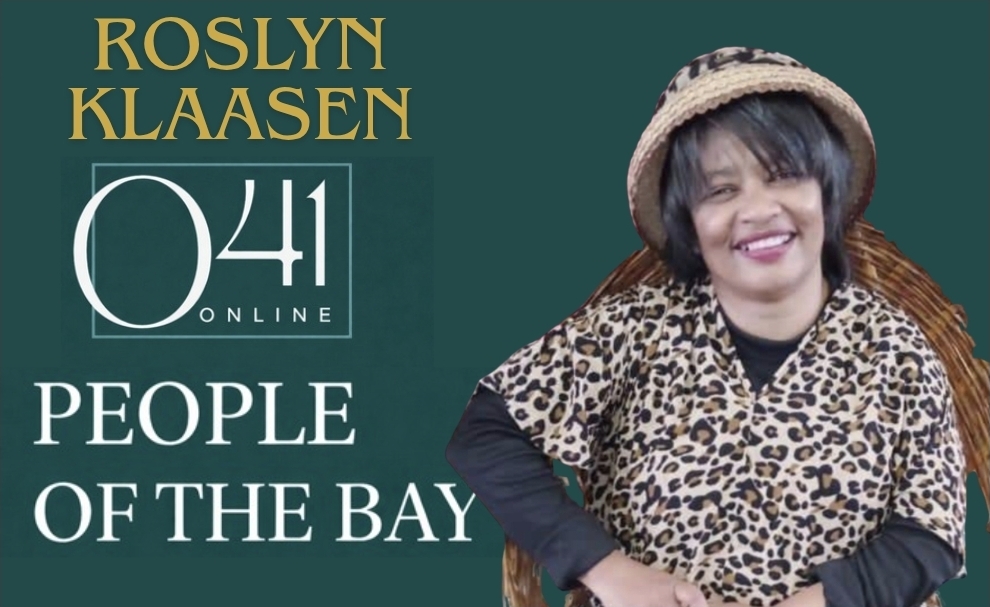
For decades, Roslyn Klaasen has never allowed disability to define who she is, but in Coming of Age: Growing up More than Once, she candidly reflects on how it reshaped her life, identity and understanding of resilience.
Many in Nelson Mandela Bay know Roslyn as a journalist, storyteller, communications professional and woman of faith. But behind the career, the community work and the resilience people admire is a deeply personal story of heartbreak, healing, survival and learning to rebuild herself more than once.
Ahead of the launch of her memoir on 30 May, Roslyn opened up to 041Online about growing up in the Bay, the life-changing accident that altered the course of her life shortly after her 21st birthday, and why she believes true strength is found in learning how to rise again and again.
“The Bay carries emotion”
When Roslyn speaks about Nelson Mandela Bay, there is both pride and tenderness in her voice. For her, the city is more than just a place. It is memory, resilience and identity woven together.
“I grew up in Korsten and Bloemendal,” she says. “I love Nelson Mandela Bay because it is big, yet small enough to get where you need to be in under an hour.”
But alongside that familiarity are memories tied to the city’s complex political history.
“I witnessed the 6 August 1990 march in Bloemendal from a distance before all hell broke loose causing what was later called the Northern Areas Uprising,” she recalls.
Years later, as a journalist, she would revisit those stories while interviewing residents affected by the uprising.
“The Bay, to me, carries emotion in the wind, the beaches, the working-class neighbourhoods, our sports culture, church life, township resilience and deep political history,” she says. “Whatever happens, we will rise again.”
That resilience is something Roslyn has witnessed throughout her career, particularly while telling the stories of ordinary people overcoming extraordinary circumstances.
“As a journalist, I experienced so much of what will always make the Bay home, the resilience of the people, the faith in the Almighty, and the stories of how people made it through difficult times.”
When the storyteller becomes the story
Roslyn’s journalism career has included memorable milestones, from working as a media officer at Nelson Mandela University to becoming part of the Eastern Cape team for the Afrikaans e-TV news programme Nuusdag.
“We travelled the province with one thing in mind: we want the stories of the people of the Eastern Cape to be told,” she says.
But writing her own memoir challenged her in ways journalism never had before.
“We were taught that we are not the story; we tell the story,” she explains. “By writing this memoir, I became the story.”
Her memoir, Coming of Age: Growing up More than Once, explores the idea that adulthood is not defined by age alone, but by the many moments in life that force us to rebuild ourselves.
“It dawned on me that coming of age is not a single rite of passage,” she says. “It is something we do many times in life through heartbreak, through pain, through resilience, and through the discovery of love that heals.”
Learning to live differently
Roslyn has lived with a spastic left side for 35 years following a life-changing accident shortly after her 21st birthday.
She speaks openly about the emotional weight that followed.
“My life was a rollercoaster of emotions,” she says. “Acceptance and forgiving myself was a big part of it.”
For years, she tried not to let her disability define her, wanting to move through the world “normally” without drawing attention to herself.
But over time, her understanding shifted.
“My disability is no longer just a challenge I face, it is also a testimony of endurance, growth and grace.”
She hopes conversations around disability continue to evolve beyond stereotypes and assumptions.
“I wish people understood that differently abled people have much more to offer and contribute to society than what we are given credit for,” she says.
Faith, family and resilience
Throughout every chapter of her life, Roslyn says faith and family have remained constant.
“Family has always been my heartbeat,” she says. “Place me among my family and I am at my happiest.”
She credits both her extended family and church community for helping guide her through difficult moments and seasons of uncertainty.
“There were moments where I wanted to give up,” she admits. “But then I remembered that many of the people with whom I shared a ward in Conradie Hospital would never walk again.”
That perspective became a turning point.
“I was given the grace to walk again, albeit differently than before the accident, and that made me pick myself up again.”
“Life is layered”
As readers prepare to experience her memoir for the first time, Roslyn hopes they leave with a deeper understanding of resilience and growth.
“Life does not require us to be an adult instantly when we turn 21,” she says. “Life is layered and every experience and phase gives us the opportunity to grow up and learn something new.”
While the memoir officially launches on 30 May, Roslyn is already thinking creatively about what comes next.
“I am thinking of writing another book,” she reveals, “as a devotional or guide based on Coming of Age.”
For someone who has spent decades telling the stories of others, this new chapter feels deeply personal. Not because it centres pain, but because it transforms that pain into something honest, hopeful and deeply human.
And perhaps that is what strength truly becomes with time: not pretending life never broke you, but learning how to rise every single time it does.


Leave a Reply