
ELEANOR Douglas-Meyers
Eastern Cape Fashion Week’s first POP UP Edition felt exactly like what it was meant to be, a preview of what’s to come and, in many ways, a reminder of where the real strength of the platform lies. Held at The Gallery on Produce in Gqeberha on Sunday, 26 April 2026, the event brought together a fashion-forward crowd, a tightly curated group of designers, and a clear sense that the runway was always going to be the main event.
MBALEEZ Steals the Show
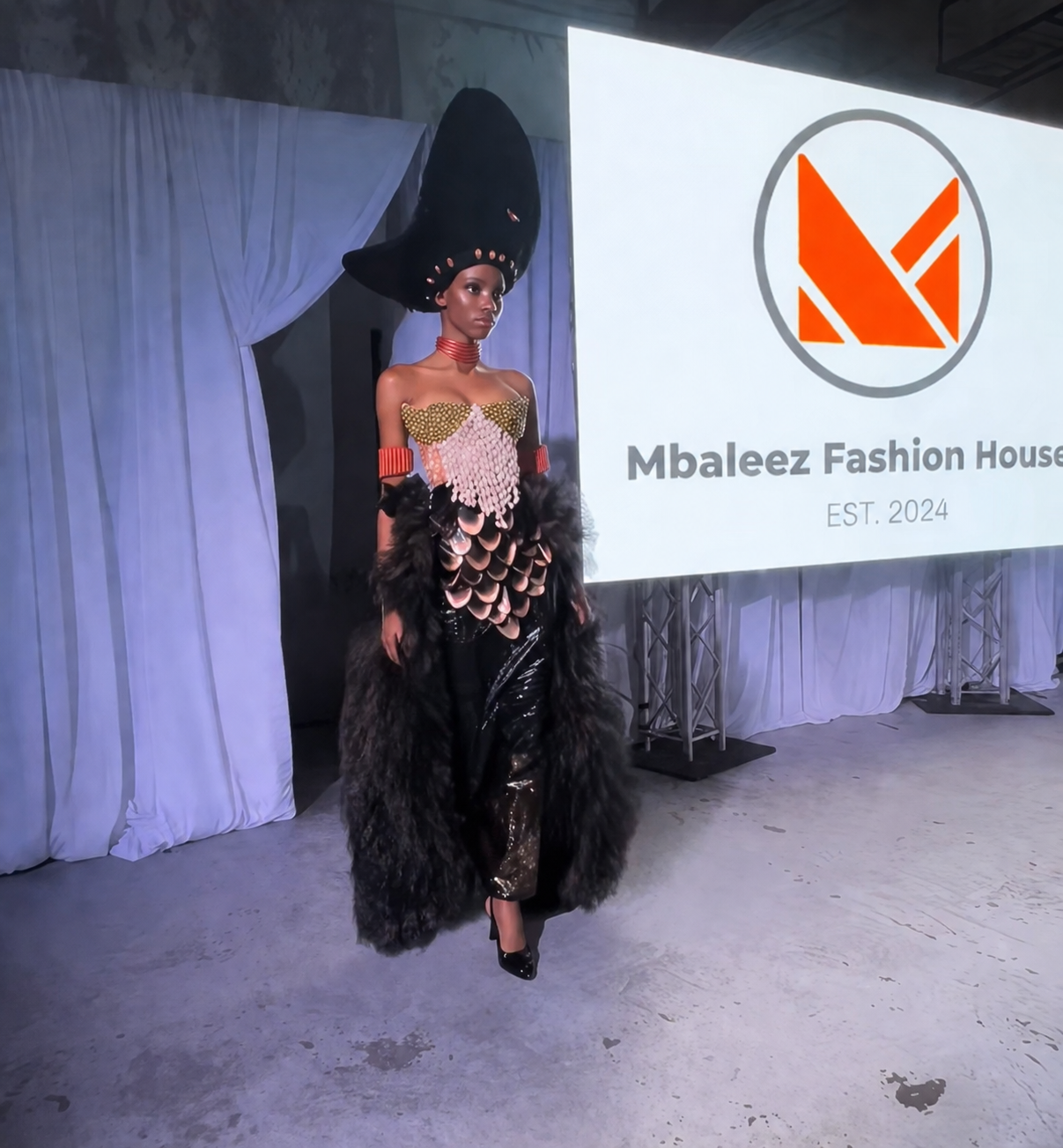
There’s always one collection that shifts the energy in a room, and this time it was MBALEEZ Fashion House by Nosibusiso Mbali.
The standing ovation said everything before anyone else needed to. This was a collection built on detail, intention, and an understanding of how to hold attention without forcing it. Flouncy silhouettes in earthy tones moved with ease, layered with hand-painted elements, beadwork, and textures that echoed woven baskets and braided hair.
What stood out wasn’t just the craftsmanship, but the cohesion. From the garments to the headpieces and handcrafted accessories, every element felt considered. It wasn’t just a collection, it was a full visual story, and the audience responded to that.
A POP UP That Kept Its Focus
As a first for Eastern Cape Fashion Week, the POP UP format leaned into intimacy. The market section was smaller than expected, and the food offering fairly limited, but it didn’t take away from the core of the event.
If anything, it made the intention clearer. This wasn’t about distractions. It was about the designers.
With the theme Fashion in the Age of AI: A Glitch in the Stitch, the brief was there to be interpreted, but what came through strongest was the human element. Texture, imperfection, cultural references, and storytelling took precedence over anything overly polished or predictable.
Designers Who Understood the Assignment
What stood out across the board was how differently each designer approached the moment.
OJ Designs by Onela Joni
A quieter kind of confidence. The collection leaned into Afro-inspired silhouettes with a noticeable European influence, particularly in the use of lace and a restrained black-and-white palette. There was a sense of refinement here, shaped by international exposure but still grounded in African identity.
Thee Kings Inc. by Thandile Ndamase
This was about presence. Bold colour, layered textures, exaggerated silhouettes, and those flashes of orange that pulled focus exactly where they needed to. Dramatic without losing control.
Keneuoe ka Bongata Creatives by Keneuoe Tamako
Avant-garde in the way that feels intentional rather than abstract for the sake of it. Raw edges, flouncy movement, strong contrasts, and silhouettes that pushed past conventional proportions. There’s a clear design voice here.
Love by Mfundo Phama
One of the more wearable collections, but still distinct. Streetwear anchored the looks, with protea-inspired prints, denim, and structured layering. It felt current, accessible, and easy to place in a real-world setting without losing its identity.
Msaba Emporium by Thakazelwa Mhlomi
A softer approach, leaning into ready-to-wear with bodycon shapes, relaxed fits, and textured fabrics. Quilting and layering added depth, creating pieces that felt considered but not overworked.
Christopher Tom by Mahlubandile Tom
This sat firmly in the elevated space. Clean lines, strong tailoring, and those subtle details, like print elements that read almost like embroidery. It’s the kind of collection that doesn’t need to shout to be noticed.
Ndimbi Clothing by Sinoxolo Manengela
Streetwear, but with a clear identity. The signature “N” branding carried through pieces that reworked everyday staples like trench coats, hoodies, and quilted denim. Raw finishes kept it grounded and current.
Why It Matters for the Bay
What ECFW continues to do well is create space. Not just for showcasing, but for positioning.
For Nelson Mandela Bay, platforms like this are less about spectacle and more about access. Access to audiences, to industry, and to the kind of visibility that moves designers beyond local recognition.
The POP UP edition may have been scaled down in certain areas, but it sharpened the focus on what actually drives the platform forward — the work itself.
The Bottom Line
If this POP UP was a preview, then the message is clear. The talent is there. The point of view is there. Now it’s about scale, consistency, and giving these designers the space to keep building.
And if there was any doubt about what people connect with, the reaction to MBALEEZ made it clear. Craft, story, and intention will always land.



Leave a Reply