
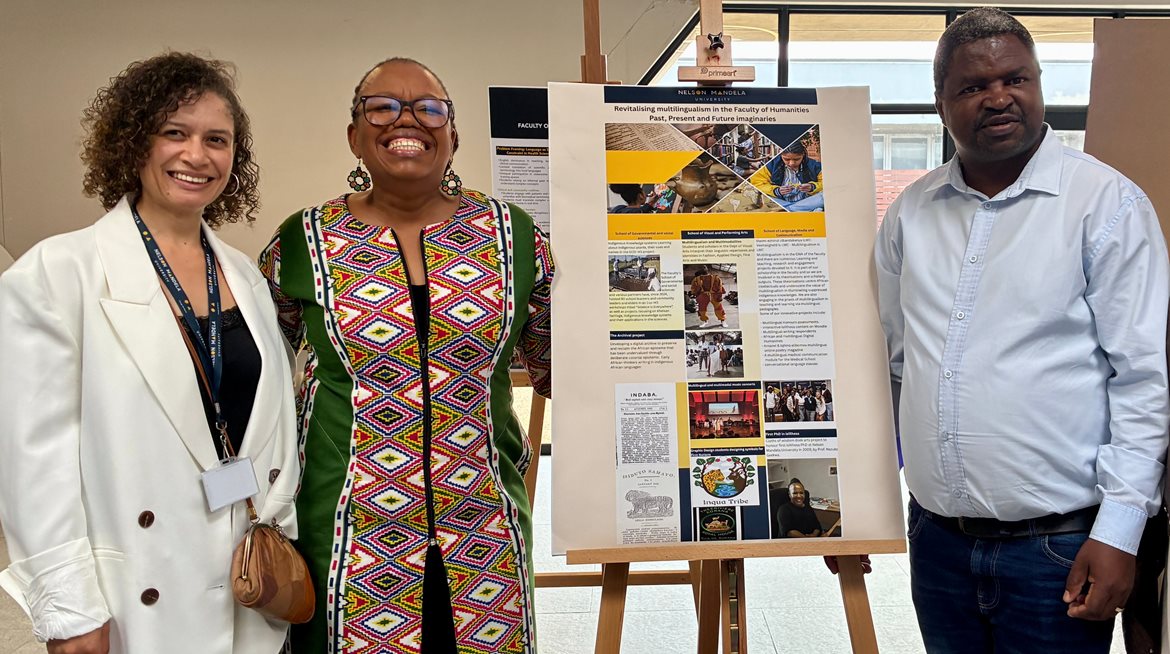
Nelson Mandela University has adopted a revised Language Policy aimed at tackling the dominance of English in higher education and creating a more inclusive multilingual learning environment.
The policy, launched on 27 March in Gqeberha, commits the university to expanding the use of isiXhosa, Afrikaans and English across teaching, research, engagement and student support.
While English will remain the primary language of instruction, the institution plans to actively incorporate other languages into learning support, tutorials, consultations and academic resources.
The move reflects a broader national effort to strengthen African languages in higher education and make university learning more accessible to students from diverse linguistic backgrounds.
Why the new policy matters
Speaking at the launch, Executive Dean of Humanities Professor Pamela Maseko, representing the Deputy Vice-Chancellor for Learning and Teaching, described the policy as both necessary and long overdue.
According to Maseko, the initiative is about acknowledging the reality that English holds significant power in academic spaces while ensuring students can still access knowledge through their home languages.
Language, she explained, is not just a communication tool but a carrier of knowledge and culture.
The revised policy also seeks to address what she called the systematic de-intellectualisation of isiXhosa, emphasising the need to develop indigenous languages as languages of scholarship and academic thought.
Multilingual support beyond the lecture hall
Although lectures will continue to take place in English, faculties are now expected to create multilingual learning environments in other academic settings.
This could include:
- Tutorials conducted in multiple languages
- Learning materials available in isiXhosa, Afrikaans and English
- Multilingual consultation sessions with lecturers
- Additional language support for assessments
Each faculty must develop its own implementation plan, with progress monitored at institutional level.
Language and belonging on campus
The conversation around language also touched on issues of identity and belonging.
Programme director Vuyo Bongela highlighted how language can shape a person’s experience of learning.
“I dream in isiXhosa, then have to translate the dream into English for somebody to understand it,” Bongela said during the launch event.
Student Representative Council member Pathan Mackenzie echoed the concern, saying students sometimes feel they must distance themselves from their linguistic heritage in order to participate academically.
Transformation Office representative Sinoyolo Magqashela warned that without language inclusion, students may feel marginalised within the university environment.
“Language is a key to unlocking knowledge and engaging society,” she said.
Multilingual initiatives already underway
Several faculties at Nelson Mandela University have already begun experimenting with multilingual learning approaches.
Science Faculty
In the Faculty of Science, multilingual glossaries paired with visual explanations are helping students better understand complex concepts.
Geoscientist Gideon Brunsdon said the goal is to strengthen both understanding and inclusion.
Health Sciences
In Health Sciences, Deputy Dean Professor Zoleka Soji noted that many students already rely on peer translation to understand difficult material.
The faculty is now piloting:
- multilingual mentoring programmes
- academic glossaries in multiple languages
Education Faculty
The Faculty of Education has introduced Siyaphambili multilingual discussion sessions, where first-year students can engage in English, isiXhosa or Afrikaans.
Peer facilitators help bridge the gap between understanding concepts and expressing them academically.
“If a student cannot ask a question in a language they know, they cannot get clarity,” explained Nozuko Rhayi.
Engineering and Technology
The Faculty of Engineering, Built Environment and Technology has also reported improvements through multilingual tutoring and peer learning.
One student reportedly reflected:
“When the concept was explained in my home language, it finally made sense.”
Inclusion also extends to sign language
The policy also commits the university to promoting South African Sign Language as part of its inclusive approach.
At the launch event, interpreter Pakama Maceba signed proceedings, highlighting the importance of accessible communication for deaf and hard-of-hearing participants.
Turning policy into practice
Speakers at the event emphasised that creating a multilingual institution will require ongoing commitment.
Programme director Vuyo Bongela reminded attendees that change will not come from policy alone.
“Policies don’t change institutions. People do.”
Language Working Group member Chanel van der Merwe reinforced the message, saying the responsibility for implementation lies with the entire university community.
A shift towards inclusive learning
The revised Language Policy signals a broader shift in how language is viewed within higher education.
Rather than being treated simply as a medium for delivering lectures, language is increasingly seen as a tool for inclusion, participation and knowledge creation.
For Nelson Mandela University, the goal is clear: create a learning environment where language helps students succeed rather than becoming a barrier to understanding.
For more Nelson Mandela University news and updates, visit www.mandela.ac.za or explore the latest stories at news.mandela.ac.za.



Leave a Reply