
By ROBIN MEYERS
There’s certainly no shortage of new vehicles trying to find their way into South African driveways lately. And while some manufacturers are still determined to convince us that we all need enormous SUVs with enough screens to rival a small cinema, others are taking a slightly more practical approach.
This time around, we’re looking at three brands making a play for South African buyers, from an affordable compact SUV to a no-nonsense working bakkie and a range of commercial vehicles aimed at keeping small businesses moving.
Different vehicles, different customers, but one common theme: value for money.
Tata Punch: Small SUV, Big Ambitions
<AsyncImage query=”2026 Tata Punch facelift South Africa new model official exterior”/>
Tata has introduced its new Punch to South Africa, and with a starting price of R224,900, it’s clearly looking to attract buyers who want SUV styling without the considerably less attractive SUV price tag.
The range consists of three models, starting with the Pure+ at R224,900, followed by the Adventure at R244,900 and the turbocharged Accomplished+ S at R269,900.
The two entry-level models use a 1.2-litre naturally aspirated petrol engine producing 65 kW and 115 Nm, paired with a five-speed manual gearbox.
The flagship gets a 1.2-litre turbocharged petrol engine delivering 88 kW and 170 Nm through a six-speed manual transmission.
It’s not going to trouble anything wearing a performance badge, but that’s hardly the point.
What makes the Punch interesting is the equipment Tata has managed to include at this price.
All three models feature six airbags, wireless Apple CarPlay and Android Auto, while the range also boasts a five-star Bharat NCAP safety rating.
Higher-specification models add features such as a 360-degree camera, automatic climate control and even a sunroof.
For someone looking to buy their first new SUV, that’s quite a bit of equipment for the money.
Of course, the real question will be how the Punch performs on South African roads, particularly with a full complement of passengers and luggage.
Still, it’s refreshing to see safety equipment receiving attention in the more affordable end of the market.
JMC Vigus Single Cab: Someone Has to Do the Actual Work
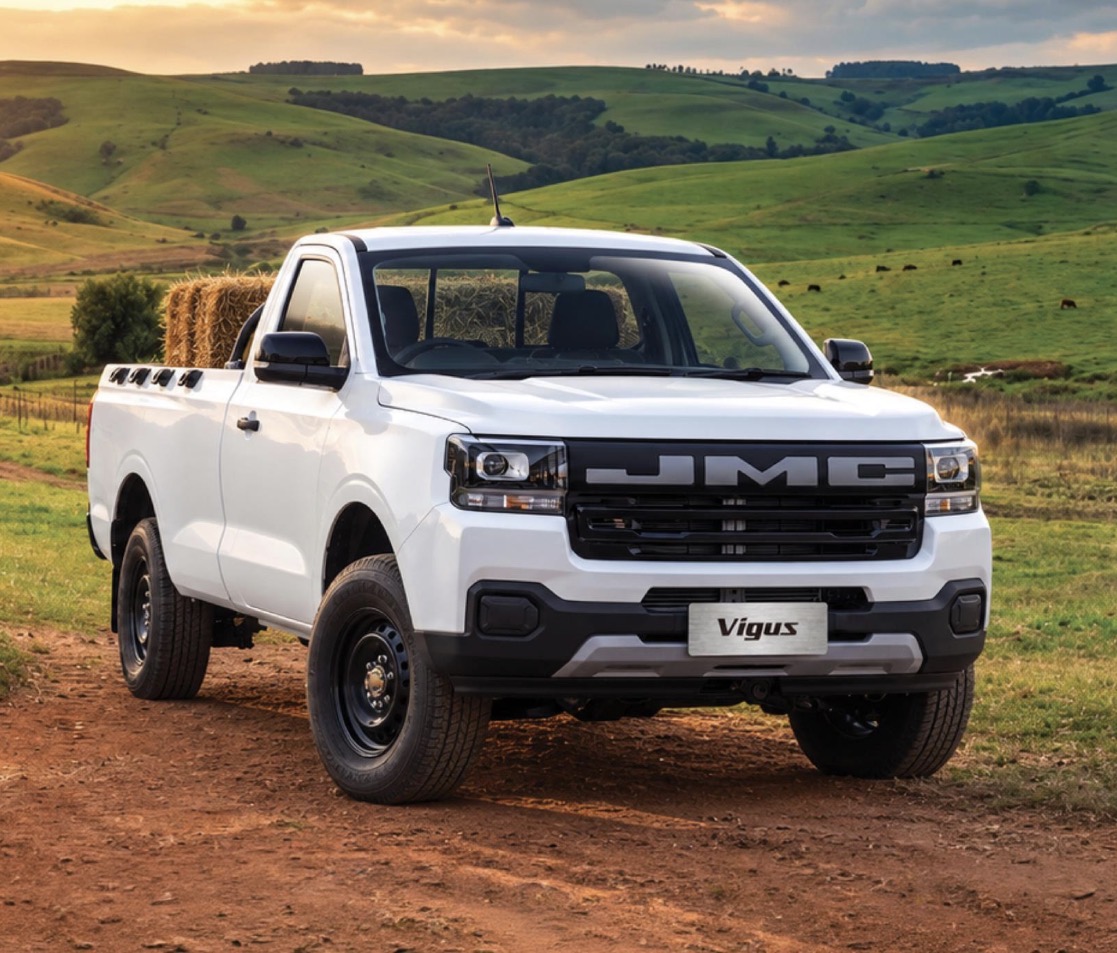
<AsyncImage query=”JMC Vigus single cab 2026 South Africa white bakkie”/>
While the Punch is trying to make SUV ownership more accessible, JMC has something considerably less glamorous in mind.
The new Vigus Single Cab is aimed squarely at contractors, farmers, fleet operators and anyone who needs their bakkie to earn its keep.
Under the bonnet is a 2.5-litre turbo-diesel engine producing 123 kW and 410 Nm, paired with a six-speed manual gearbox.
Those are respectable figures for a working vehicle, particularly with the torque available from just 1,400 rpm.
More importantly, the Vigus offers a one-tonne payload and a braked towing capacity of 2,000 kg.
The load bed measures 2,310 mm in length and comes with a factory-applied spray-in bedliner.
There’s also 210 mm of ground clearance, rear leaf springs and a fairly straightforward 4×2 drivetrain.
Inside, you’ll find air conditioning, Bluetooth connectivity, USB ports and rear parking sensors.
Nothing particularly extravagant, but let’s be fair: if you’re buying a single cab to transport cement bags and building equipment, ambient lighting probably isn’t particularly high on your list of priorities.
JMC is offering a five-year/100,000 km warranty, although pricing wasn’t included in the launch announcement.
And pricing will be important.
South Africans have plenty of established options when it comes to working bakkies, so JMC will need to offer a convincing ownership proposition to win over buyers.
The specifications look promising, but long-term reliability, servicing costs and parts availability will ultimately matter more than the brochure.
DFSK: A Name You Might Need to Get Used To
<AsyncImage query=”DFSK K01 compact bakkie South Africa commercial vehicle”/>
If you’ve never heard of DFSK, you’re probably not alone.
The Chinese automotive brand has been around since 2003 and operates in more than 70 countries and regions, but it’s still establishing its identity among South African motorists.
Rather than chasing the luxury SUV market, DFSK is focusing on something a little more down to earth: affordable commercial transport.
Its local range includes the K01 compact bakkie, C35 Panel Van and C35 Crew Bus.
These are the kinds of vehicles aimed at delivery businesses, tradespeople and small companies that need practical transport without spending a fortune.
One interesting development is DFSK’s OEM-approved LPG conversion initiative, which offers qualifying customers the option of reducing fuel costs while retaining the flexibility of petrol operation.
The company also says it’s investing in local aftersales support, with monthly parts shipments, a dedicated parts operation in Kempton Park and a reported 90% first-pick parts availability rate.
That’s an important consideration.
Buying an affordable commercial vehicle is one thing. Keeping it on the road when something breaks is quite another.
For a small business, a vehicle standing idle while waiting for parts isn’t just inconvenient. It can mean lost income.
DFSK clearly understands that it needs to establish confidence in its aftersales support, particularly while building its reputation in South Africa.
Whether the brand manages to turn that into long-term customer loyalty remains to be seen.
More Choice Is Good, but Value Is More Than a Price Tag
What’s interesting about these three brands is that they’re approaching the South African market from slightly different directions.
Tata is offering an affordable SUV with a generous equipment list. JMC is targeting businesses that need a capable working bakkie. DFSK is focusing on commercial transport and the needs of smaller operators.
And while attractive pricing and impressive specifications certainly help, South African motorists tend to ask some fairly sensible questions.
What’s it going to cost to service? Can I get parts when I need them? What happens when the warranty expires? And perhaps most importantly, will it still be doing its job five years from now?
Those aren’t always the questions manufacturers want to lead with, but they’re the ones that matter when you’re spending your own money.
It’s encouraging to see more choices entering the market, particularly at the affordable and practical end of the spectrum.
Now comes the difficult part: proving that they’re worth buying.
Based on manufacturer media releases issued between 23 October and 6 November 2026. Vehicles have not been independently road-tested for this article.





Leave a Reply