
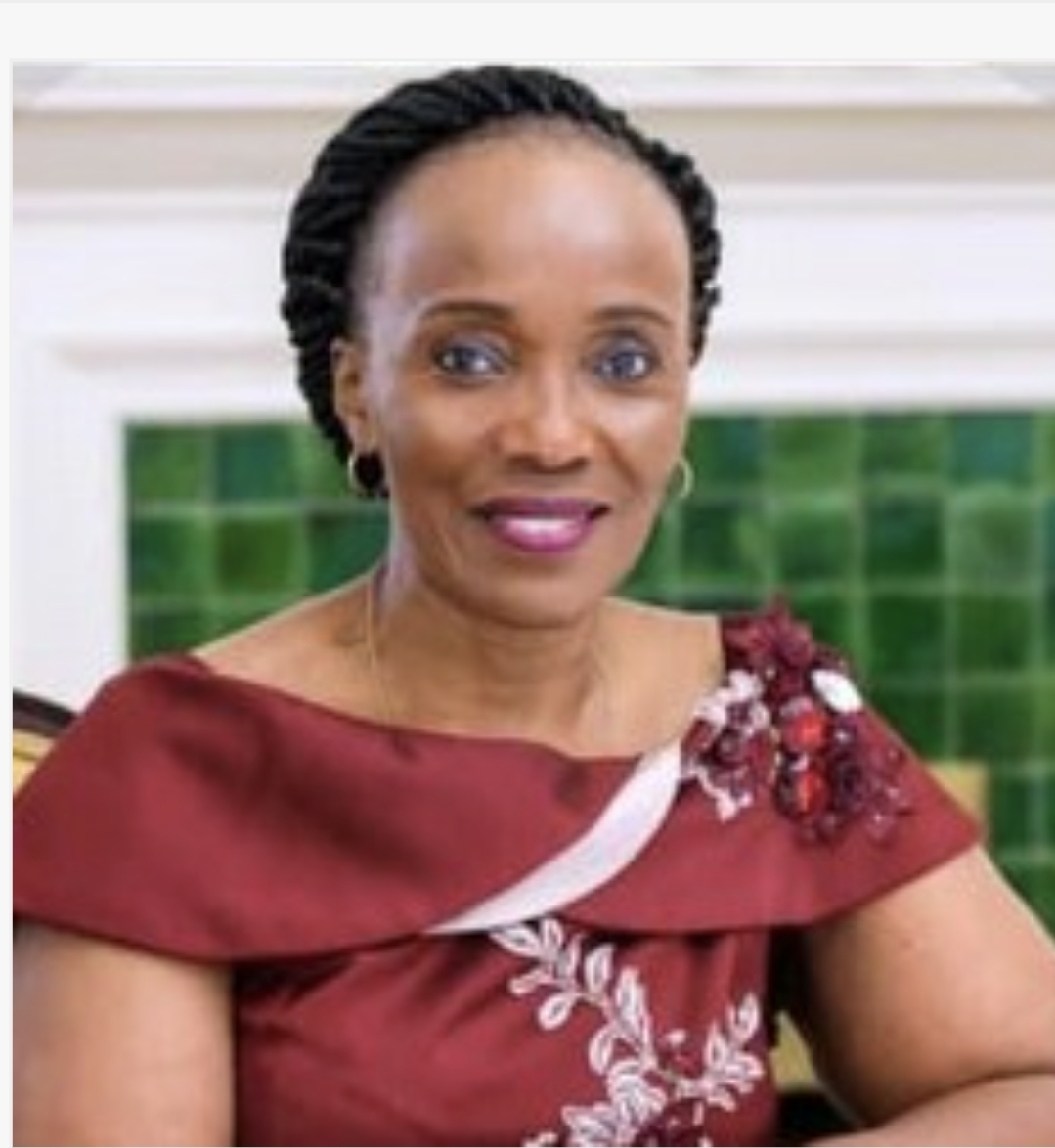
Young people must take a leading role in shaping how artificial intelligence is governed globally to ensure the technology advances equity rather than deepening inequality.
That was the message from Sindisiwe Chikunga while delivering the keynote address at the 4th BRICS Youth Innovation Summit 2026, currently taking place at Tshwane University of Technology.
The Minister challenged young innovators across BRICS nations to actively participate in setting global standards for artificial intelligence governance, warning that the technology itself is not neutral.
“AI must work for people and their wellbeing, not the other way around. This means insisting on African and BRICS participation in setting global AI governance standards,” Chikunga said.
“It means asking who owns the data, who benefits from the model, and who bears the cost when the model fails. Innovation in AI without democratic accountability is not progress. It is a new form of enclosure.”
Youth-led innovation takes centre stage
Held under the theme “Youth-Led Innovation for Sustainable Development”, the summit runs from 8 to 10 April 2026 and brings together young entrepreneurs, business leaders, investors and innovation experts from BRICS+ countries and the wider Global South.
Chikunga praised the South African BRICS Youth Association and its partners for sustaining the summit platform over the past four years, describing it as a critical space for building a more just and sustainable future.
She reminded delegates that BRICS leaders had already acknowledged youth as a driving force for development during the 15th BRICS Summit in 2023, where commitments were made to place young people at the centre of sustainable development strategies.
The Minister said the summit should also serve as a platform where young people can hold governments accountable.
“The summit should serve as a space in which young people exercise their right to hold their governments to what was promised in their name and to demand evidence that the commitment to youth leadership is being translated from declaration into young people’s lived realities,” she said.
BRICS in a changing global order
Chikunga also highlighted the growing global influence of the BRICS bloc, noting that the group now represents more than 45 percent of the world’s population and over a third of global GDP.
According to the Minister, the bloc’s importance lies in its push for global governance structures that reflect modern realities rather than those established after World War II.
“From an economic development standpoint, BRICS nations are home to the largest concentration of young people on the planet,” she said.
“The median age in India is 28. In South Africa it is 27. In Ethiopia it is 19.
“The question is not whether these young populations will shape global markets, labour forces and innovation ecosystems. The question is whether you will do so on terms that serve your own societies or on terms dictated by others.”
A generation facing interconnected challenges
Chikunga warned that today’s generation of young people is confronting a complex set of interconnected global crises.
“The threats around which the youth must innovate are increasingly existential,” she said.
She argued that the international system built after 1945 was based on the expectation that economic growth and productivity gains would be broadly shared, trade would benefit all countries and democratic institutions would manage tensions between labour and capital.
“That bargain has collapsed,” the Minister said.
Four priorities for BRICS youth
Chikunga outlined four key priorities for young people across BRICS nations:
- Defending sovereignty through innovation
- Challenging orthodox economic models
- Taking a critical approach to artificial intelligence
- Strengthening people-to-people relations across countries
She emphasised the need for young innovators to develop indigenous technological capacity and data governance frameworks that protect citizens from digital exploitation.
“Young people must develop indigenous technological capacity and data governance frameworks that protect African and BRICS citizens from digital extraction,” she said.
“You must innovate new economic thinking grounded in productive capacity, industrial strategy and the redistributive role of the developmental state. Your task is not to reject AI but to approach it critically.”
Chikunga added that the strength of BRICS will ultimately depend not only on economic partnerships but also on deeper cultural and intellectual connections between its people.
“People-to-people relations — cultural exchange, academic mobility, artistic collaboration and shared intellectual production — are the infrastructure of lasting solidarity,” she said.
A call for youth leadership
In closing, the Minister urged young people to actively shape the future despite global uncertainty.
“The world you inherit is not the world that was promised,” she said.
“But you are not inheriting this world as passive recipients. You are here because you have chosen to act.”
Source: SAnews.gov.za





Leave a Reply