
By Robin Meyers
It’s been another interesting week in South African motoring. From a powerful new SUV promising the best of electric and petrol motoring to questions about vehicle quality and the growing role of solar power, there’s plenty happening on our roads.
Here’s what’s been making headlines.
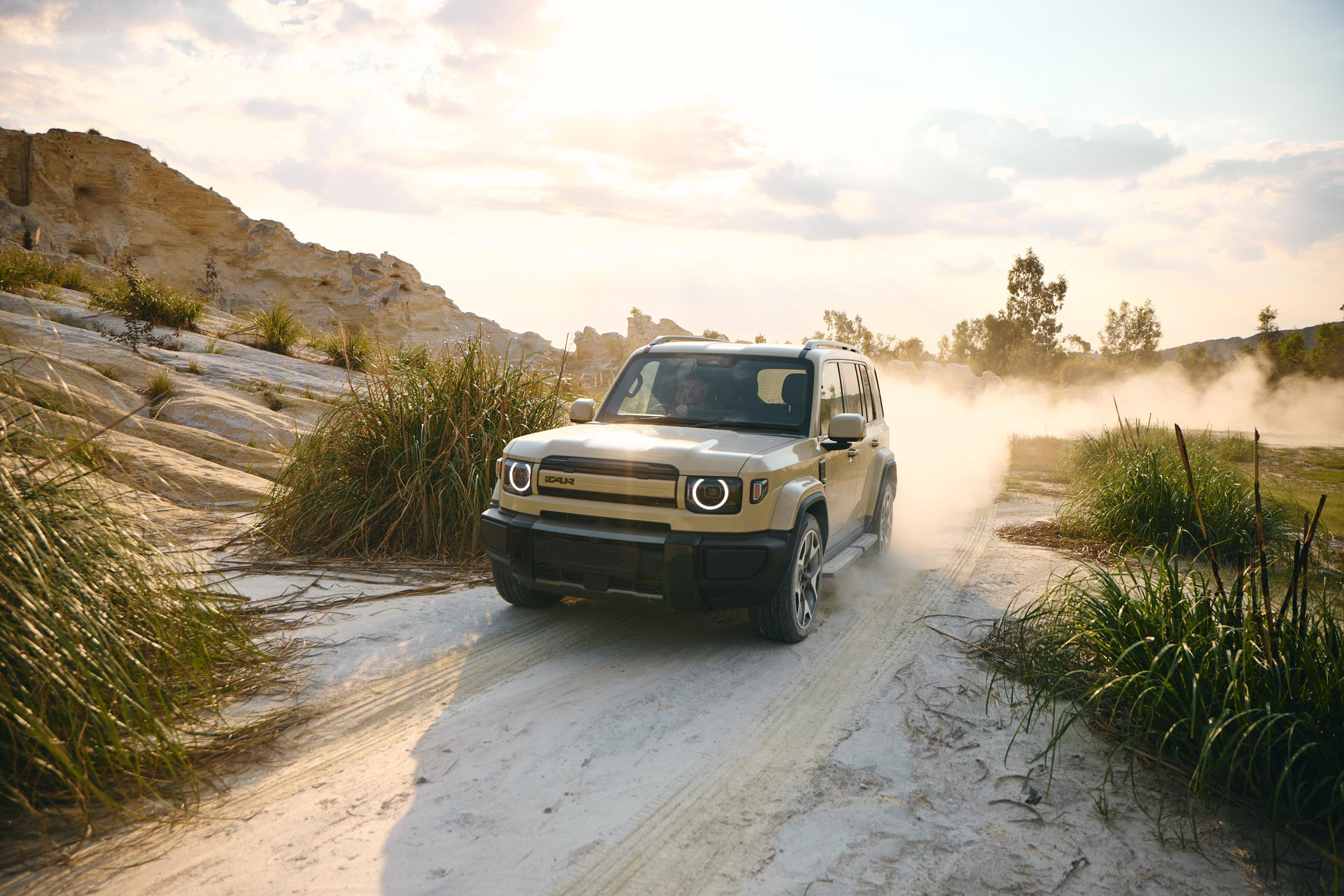
iCAUR V27 Arrives with 335 kW and a R929,900 Price Tag
The SUV market certainly isn’t getting any quieter, and the latest arrival from iCAUR is making quite an entrance.
The new V27 AWD is a five-seater range-extender electric SUV boasting 335 kW, 505 Nm of torque and a claimed 0–100 km/h sprint of just 5.9 seconds. Not bad for something measuring more than five metres long.
Unlike a conventional hybrid, the V27 uses electric motors to drive its wheels, with a 1.5-litre turbocharged petrol engine acting as a generator when additional electricity is needed.
The result? A claimed 150 km of electric-only driving and up to 1,000 km of combined range, both measured on the NEDC test cycle.
There’s plenty of technology too, including a 15.4-inch infotainment screen, ventilated front seats, a 15-speaker sound system and a panoramic glass roof.
At R929,900, it certainly isn’t an entry-level proposition, but it does offer an interesting alternative for buyers curious about electric motoring without committing entirely to charging infrastructure.
Jetour T1 Under Scrutiny Following Roof Deformation Complaint
It’s not all smooth driving in the SUV world.
The Automobile Association (AA) has raised concerns following a complaint involving a Jetour T1 that reportedly developed visible roof-panel deformations during mild gravel-road driving.
An independent vehicle assessor suggested the damage could indicate a structural stiffness issue, while the Motor Industry Ombudsman of South Africa recommended that the vehicle be replaced.
Jetour’s parent group is appealing the ruling, and further technical investigation is underway.
The AA has also questioned revised payload figures for the Jetour T1 and T2, particularly whether the necessary regulatory approvals are in place.
Jetour South Africa says it remains committed to investigating the matter and resolving it through the appropriate channels.
For prospective buyers, the important point is that the investigation is ongoing. No broader manufacturing defect has yet been conclusively established.
Jetour Has Bigger Plans for Africa
Despite the recent controversy, Jetour is pushing ahead with ambitious plans for the continent.
At its Africa Forward Summit in Johannesburg, the manufacturer outlined a strategy focused on local assembly, skills development, expanded after-sales support and investment in African automotive markets.
The brand says it already operates in 42 African markets and plans seven vehicle assembly facilities across the continent next year.
It’s an interesting development at a time when Chinese automotive brands are rapidly establishing themselves in South Africa.
Of course, long-term success will depend on more than attractive pricing and ambitious expansion plans. Reliable vehicles, accessible parts and dependable customer service will ultimately determine whether these newer brands win lasting consumer confidence.
Could Your Rooftop Solar Panels Power Your Next Car?
Electric motoring in South Africa has always faced one particularly awkward question: what happens when the electricity supply becomes unreliable?
Volvo Car South Africa believes the answer could increasingly be found on our rooftops.
With private solar installations becoming more common, homeowners are discovering that an electric vehicle can potentially be charged using electricity generated at home.
According to figures cited by Volvo, South Africa recorded 22,389 new-energy vehicle sales between January and September 2026.
The manufacturer argues that charging at home or work could make electric vehicle ownership considerably more convenient, particularly for drivers with access to solar and battery storage.
For many motorists, the initial cost of an electric vehicle remains a hurdle. Still, the idea of generating some of your own driving energy is becoming increasingly attractive.
Especially when filling up at the petrol station feels like a monthly financial commitment.
Hyundai’s Samantha Brits Recognised Among Motoring’s Leading Women
And finally, some well-deserved recognition.
Hyundai Automotive South Africa’s National Corporate Sales Manager, Samantha Brits, has been named among the 36 winners of the 2026 Motoring Women of the Year Awards.
The awards, hosted by Women In Motoring South Africa, attracted more than 4,000 nominations, with winners selected following an extensive assessment process.
Brits was recognised for her leadership and contribution to Hyundai’s corporate sales operations.
It’s encouraging to see the women helping shape South Africa’s automotive industry receiving recognition in a sector that has historically been dominated by men.
Until Next Time
Whether it’s new technology, ambitious manufacturers or important questions about vehicle quality, South Africa’s motoring landscape continues to evolve.
As always, the real test isn’t simply what manufacturers promise on paper. It’s how their vehicles perform on our roads, in our conditions and in the hands of everyday motorists.
Keep an eye on 041Online Motoring for more motoring news, local vehicle reviews and developments from the automotive world.





Leave a Reply