
ELEANOR DOUGLAS-MEYERS
When Rachel Kolisi took the floor at the Boardwalk in Gqeberha last night for the second local instalment of her Falling Forward Roadshow, the audience was enthralled. There were moments of laughter, moments that were noticeably more emotional and, perhaps most importantly, moments that encouraged those sitting in the room to reflect on their own stories.
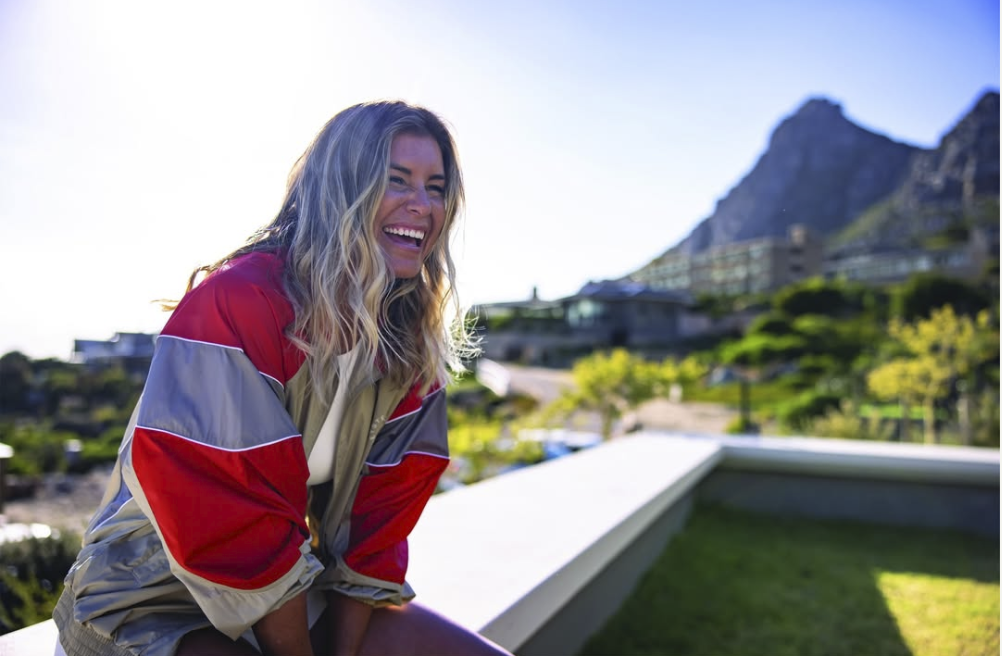
For Rachel, bringing Falling Forward back to Nelson Mandela Bay felt like a natural choice. Born and raised in Makhanda, she describes herself as an Eastern Cape girl at heart and says returning to this part of the country always feels like coming home. There was also a very real demand for a return visit, with people reaching out after the first roadshow to ask when she would be back.
She admits that she is also quite intentional about taking the experience beyond the places that traditionally receive the big events. Johannesburg and Cape Town are almost always on the list, she says, but there are audiences elsewhere who want these experiences too. For Rachel, returning to Gqeberha simply made sense.
Falling Forward was never meant to be just about Rachel
At first glance, Falling Forward is very much Rachel’s story. The documentary explores deeply personal chapters of her life, while her memoir, written with Zibu Sithole and published by Pan Macmillan South Africa, allows her to unpack even more of the journey behind the person so many South Africans have come to know publicly.
What becomes clear when speaking to Rachel, however, is that she doesn’t want the conversation to end with her.
She feels she has told her story, and now she hopes that being vulnerable enough to share it will encourage other people to look at their own experiences, reconnect with themselves and, when they are ready, tell their stories too.
This is also why the roadshow has become about more than arriving in a city, screening a documentary and moving on to the next stop. Rachel and her team make an effort to connect with local businesses wherever they go, creating a market around the experience and finding ways to incorporate local choirs, creatives and people working within arts and culture.
It is something Rachel speaks about with real intention. Falling Forward may carry her name and her story, but she doesn’t see herself as the most important part of it. She believes the project has become much bigger than her and describes herself simply as a vessel for what it has grown into.
A journey she didn’t necessarily plan
Considering what Falling Forward has become, it is interesting to hear Rachel admit that a documentary, book and travelling roadshow were never part of some elaborate plan.
She is also quick to give credit to the women who helped her get here, particularly Lauren Budde and Carly Smith, who have been an important part of the journey behind the scenes.
Carly, a friend and content creator, encouraged Rachel to begin documenting the season of life she was navigating. It was an idea Rachel initially needed some convincing about, but one that would eventually develop into something far bigger than she imagined.
Lauren has worked closely with Rachel for years through the Kolisi Foundation and has been part of the support system around this next chapter too.
Rachel speaks about both women with gratitude, particularly because there is an understanding that while audiences see the finished documentary, the book and Rachel standing on a stage, there are people behind the scenes who helped make taking that first step possible.
Looking at where that decision has led, Rachel says she feels proud, honoured and incredibly humbled. There are still times when she is standing on stage, takes a moment to look around at the people who have come to hear her speak and finds herself thinking, “Wow, this really happened.”
If one person connects, it is enough
Faith is central to Rachel’s understanding of why she needed to tell her story in the first place. She believes that God called her to do this and says that, from the beginning, she had to remind herself not to measure the value of Falling Forward by how many people showed up.
“If I only touch one person with my story, that’s enough,” she told 041Online.
That philosophy has stayed with her even as the project has grown considerably beyond those initial expectations. The first Falling Forward tour reached thousands of people across five cities, while the second has expanded across South Africa and Namibia.
The numbers are impressive, but Rachel repeatedly brings the conversation back to connection. She knows that the people sitting in the audience haven’t necessarily lived the same life she has, but that isn’t really the point. What she hopes is that something in her experience resonates with something in theirs, whether that is navigating change, rediscovering yourself, dealing with loss or simply finding the courage to take the next step when life doesn’t look the way you expected it to.
It is perhaps also why Falling Forward works as a title. Moving forward doesn’t always look particularly graceful and, sometimes, progress happens while everything still feels incredibly messy.
Taking the kids along for the journey
There is another side to taking a roadshow around the country that Rachel is very aware of, and that is what it means for her children.
As a single mother, committing to Falling Forward meant accepting that there would be periods when travelling and work would take her away from them. Their buy-in mattered to her, and she says they have been incredibly supportive of what she is doing.
There are boundaries, though. While the children have attended events, Rachel has chosen not to let them watch the documentary.
That doesn’t mean they haven’t found their own place in the Falling Forward experience. At some of the events, they have sold cupcakes, something Rachel particularly enjoys because she is passionate about encouraging entrepreneurship.
It is a small part of the much bigger Falling Forward story, but perhaps one of the most relatable. Behind the woman travelling between cities, standing on stages and sharing some of the most vulnerable parts of her life is still a mom trying to balance work, purpose and parenting, with her children finding their own ways to be part of what she is building.
Bringing it back to the Eastern Cape
The Eastern Cape has been woven into Falling Forward from the beginning. Rachel chose her hometown of Makhanda as the starting point for the original roadshow before bringing it to Gqeberha, and returning to Nelson Mandela Bay for a second time feels particularly significant considering just how much the project has grown since those first events.
Last night, as she stood in front of another Gqeberha audience, it was also clear that the story has moved beyond simply being about what happened to Rachel Kolisi.
It is now about what happens when sharing one person’s story creates room for someone else to examine their own. It is about the local entrepreneurs who are invited into the space, the artists and performers who become part of the experience, the people working behind the scenes and the audience members who leave carrying something different from what they arrived with.
Rachel has already done the difficult part of putting her story into the world. Where Falling Forward goes from here is something she is excited to discover, particularly if it continues to encourage other people to connect with themselves, share their experiences and find their own way forward.
For an Eastern Cape girl who once told herself that reaching just one person would be enough, watching another Gqeberha audience hang on to her words must feel like a pretty special homecoming.



Leave a Reply